
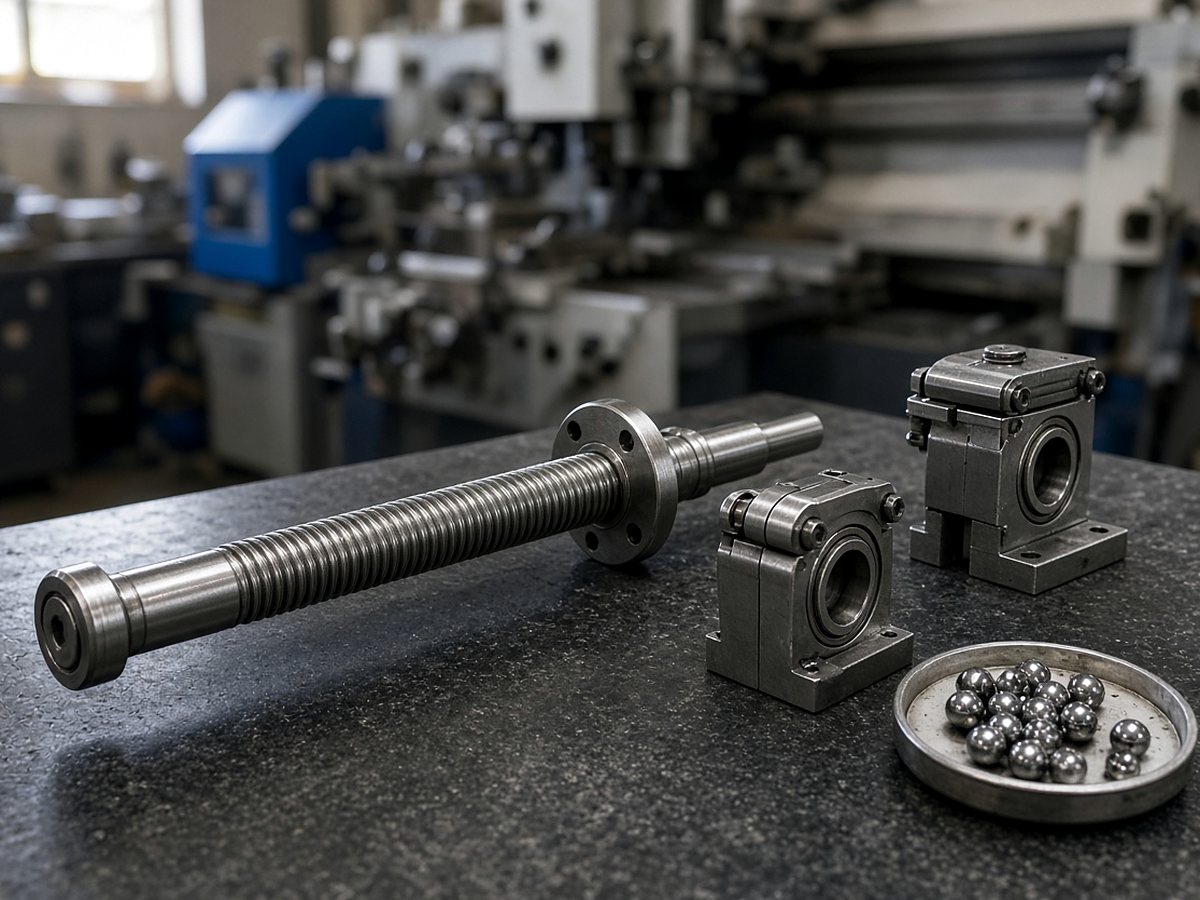
Ballscrew details before ordering
Before a ballscrew assembly is ordered or fitted, check the machine details, wear points, and matching information for feed component replacement.
Record the screw diameter, lead, overall length, journal sizes, and end machining from the unit that came off the machine. On older equipment, compare the thrust bearing arrangement and coupling bore as well, because previous repairs often leave mixed parts in place. Randburg workshops also need to note whether swarf, dust, or coolant contamination has marked the screw or damaged the wipers.
Take clear photos of the complete axis setup before stripping anything further. Include the nut housing, support blocks, way covers, lubrication points, and any witness marks on the screw, because these details help distinguish wear from alignment trouble. A short note on backlash, noise, or tight spots through travel is just as useful as the pictures.
Axis checks that prevent mismatch
The aim is to identify whether the replacement needs a complete ballscrew set, a matching nut, support bearings, or correction of mounting geometry. Ball return style, preload class, and handedness all affect fitment, especially where the original assembly came from an imported machine with limited markings. One accurate set of measurements saves more time than reworking brackets after the parts arrive.
First, gather the machine make, model, axis position, and any numbers stamped on the screw or nut flange. Add photos of both ends of the screw, the bearing supports, and the coupling area so the matching process starts from the actual assembly rather than guesswork. If the machine has been modified, include that note with the parts request.
- Lead, length, journals, and nut style
- Bearing arrangement checked against axis layout
- Photos of both machined screw ends
Workshop conditions affecting ballscrews
A machine that runs in abrasive dust or cast iron fines will often show damage at the wipers and exposed turns first. Where coolant leaks into the support end, the bearing seats and locknut area can corrode or lose lubrication without obvious external signs. Mention any crash, servo fault, or lubrication failure early, because each one points to a different inspection route.
Coastal humidity around Durban and Cape Town makes storage and rust prevention more important for loose assemblies waiting to be fitted. Inland sites around Johannesburg often deal with dry contamination that works past damaged bellows and covers. Power interruptions also matter when axis position is lost or a machine stops mid travel and the screw has to be checked for brinelling or impact damage.
Operated by Astros Marketing (Pty) Ltd from 2 Makro Place, Sunnyrock 1401.
Machine information to send
Send the machine type, control, axis name, and what the operator reported before strip-down started. Note whether the problem was backlash, chatter on feed, servo overload, poor finish, or a hard stop near one end of travel.
Keep the job sheet with the measured dimensions, photos, and removed-part markings in one file. That record helps when purchasing compares alternatives or when a workshop rebuild later includes thrust bearings, couplings, mounts, and lubrication lines.
What our Machine Tool Parts customers say
Verified Google reviews