Common servo cable faults
Servo Cable is for replacement cabling on machine axes, drives, and related control connections. It helps workshops identify the right cable type before faults, damage, or age-related failure stop a machine.
Begin with the machine model, axis name, and the exact alarm or behaviour seen at the control. Randburg and Johannesburg workshops often deal with heat, dust, coolant mist, and repeated cable flexing in drag chains, while coastal sites may also find green corrosion at plugs and shield terminations.
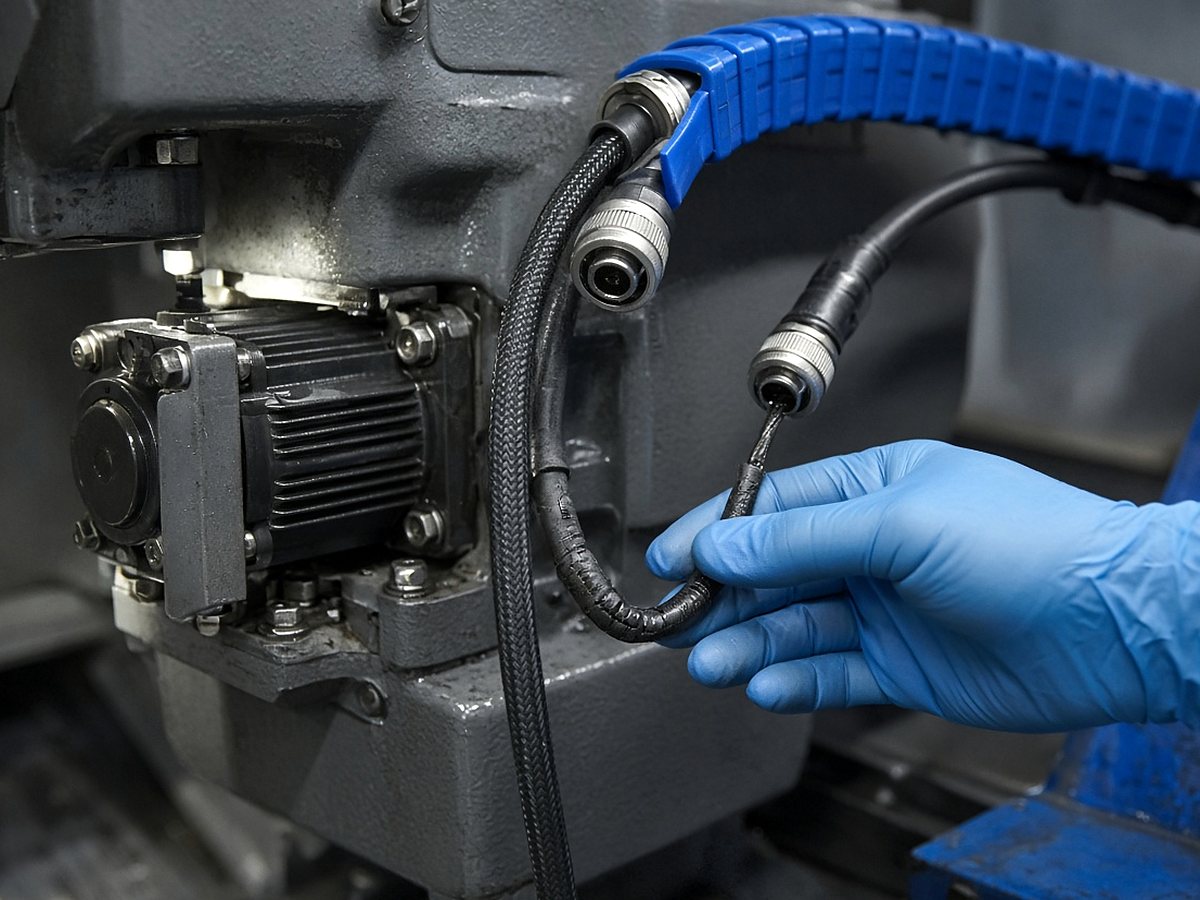
Check the full cable run before ordering a replacement. Look at plug type, pin count, shielding, outer sheath damage, and whether the fault sits at the motor end, cabinet end, or where the cable bends during travel.
Details needed for matching
Useful information includes overall length, connector style, axis function, and whether the cable serves power, brake, or encoder signals. A clear note on machine make, drive type, and any previous electrical changes helps avoid mixing similar cables that pin out differently.
Before sending an enquiry, compare the label on the old cable with the motor and drive references. Include one photo of each connector, the damaged section if visible, and the machine nameplate so the replacement can be matched against the installed control setup.
- Motor and drive references recorded
- Connector faces photographed clearly
- Fault history added to request
Workshop conditions that matter
Servo cable life is affected by how the machine is used, not only by age. Tight bend radius, unsupported spans, swarf build-up around carriers, and coolant contamination can all shorten service life or create hard-to-trace feedback faults.
In coastal areas, moisture and salt air can attack connector shells and exposed braid if cabinet seals are poor. Inland sites often see fine dust entering trays and cabinets, which makes regular inspection of glands, clamps, and earth bonding worthwhile after electrical work or machine moves.
Operated by Astros Marketing (Pty) Ltd from 2 Makro Place, Sunnyrock 1401.
Checks before replacement
Confirm that the fault is not coming from a damaged plug, loose terminal, or failed servo motor before changing the cable. Swap tests, insulation checks, and continuity testing through the flexed sections can help identify whether the break is internal.
File the cable details with the job sheet on the same day. Note axis name, connector type, cable length, and any damage at the gland or drag chain so purchasing has the right reference.
What our Machine Tool Parts customers say
Verified Google reviews