
How Spares Bridge supports a busy workshop week
Spares Bridge covers machine-tool parts that are awkward to source when a workshop is already under pressure. Buyers and maintenance teams can track down the items that hold up repair work or restart plans.
When a machine stops over one missing component, Spares Bridge helps narrow the request before the wrong item is ordered. Include the machine model, any casting or plate numbers, shaft sizes, thread details, and whether the failed part came from the head, feed train, lubrication system, or control side. Gauteng dust, coastal storage, and repeated power interruptions can all change what should be checked around the failed part.
Photos matter most when the missing piece is from an older lathe, mill, grinder, or drill with mixed repair history. Show the mounting face, worn keyways, broken fasteners, spacer stacks, and any hand-written numbers left from a previous repair. A clear image of the surrounding assembly often reveals whether the problem is the part itself or wear in the housing, slide, or drive.
Parts that stop a restart
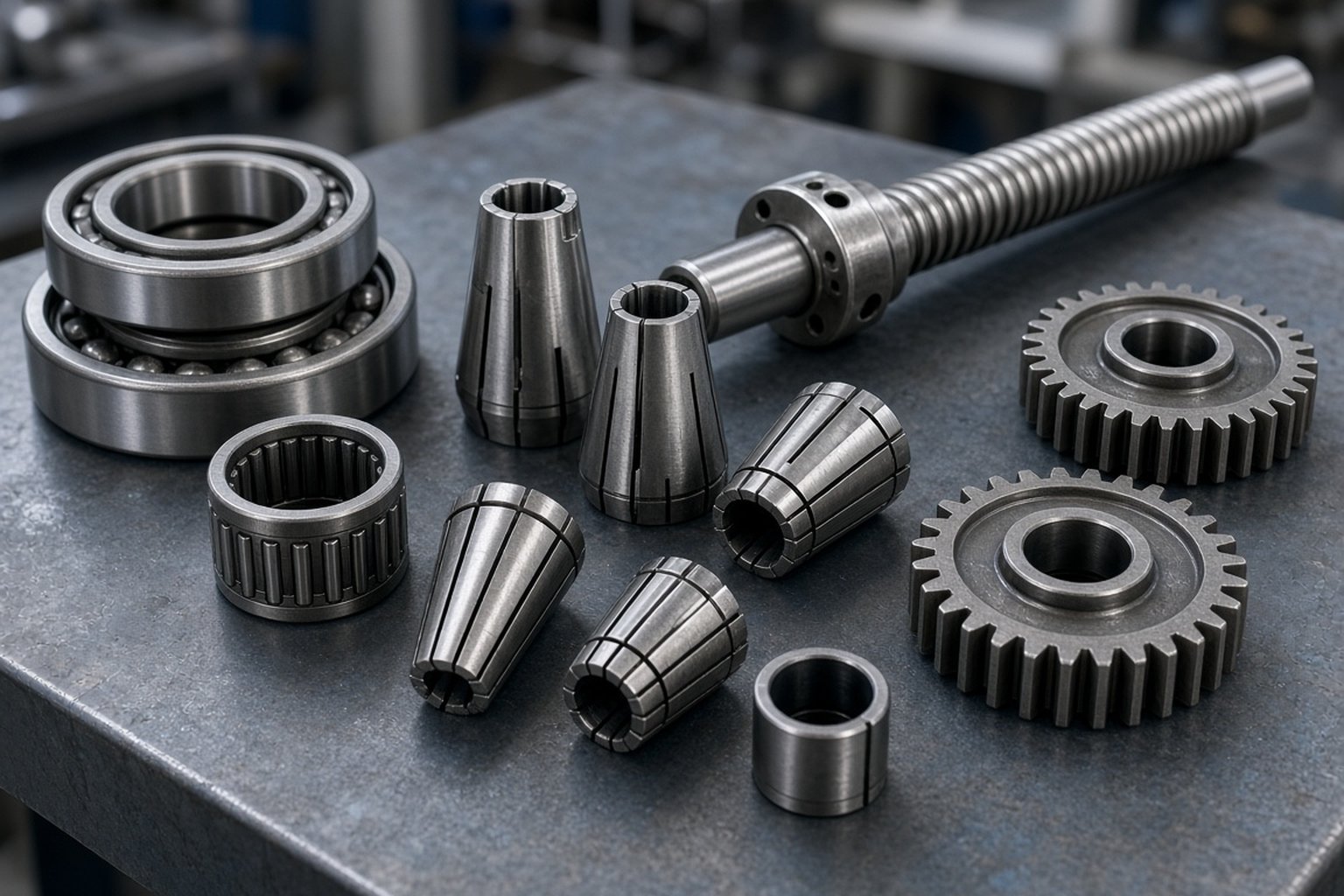
Spares Bridge focuses on the awkward items that hold up recommissioning after a strip, repair, or long idle period. That can mean feed screws, bearings, gears, seals, switches, knobs, handles, oil sight glasses, guards, or small mechanical pieces that are missing from the assembly. Instead of treating every request as a standard stock enquiry, the page centres on identifying exactly what the machine still needs to run correctly.
Use Spares Bridge when the machine is complete enough to inspect but not complete enough to return to service. Cross-check the part number, dimensions, and machine reference against the plate, manual, or removed sample before sending an enquiry. If the machine has been modified, note any non-standard brackets, drilled holes, replacement motors, or changed electrics with the same request.
- Bearing, gear, seal, and switch tracing
- Photos of mounting faces and wear points
- Machine references tied to each enquiry
Randburg to coastal workshop conditions
A spare that survives in a Randburg workshop may need different storage care in Durban or Cape Town. Surface corrosion, faded labels, and damaged packaging are more common where parts sit near moist air, while inland dust tends to get into open assemblies, cabinets, and lubricated surfaces. For that reason, it helps to mention whether the machine stands in active production, long-term storage, or a strip bay waiting for rebuild work.
Electrical interruptions also affect fault finding on machine-tool parts. A contactor, relay, limit switch, encoder coupling, or lubrication timer can look like the failed item when the deeper issue is unstable supply or damage after repeated stop-start cycles. Mechanical checks should include backlash, shaft play, cracked housings, worn bores, and witness marks that show the part has been running out of line.
Operated by Astros Marketing (Pty) Ltd from 2 Makro Place, Sunnyrock 1401.
Details that help identify spares
Use Spares Bridge for machine-tool parts that fill the gap between a breakdown, an older machine, and the next proper replacement order.
Send the removed sample dimensions where possible, even if the original number is unreadable. Basic measurements such as outside diameter, bore, length, pitch, key size, bolt centres, and direction of rotation can separate two similar parts from very different machines. If purchasing is involved, attach the job sheet or maintenance reference so the spare can be linked to the correct stoppage or rebuild file.
What our Machine Tool Parts customers say
Verified Google reviews