
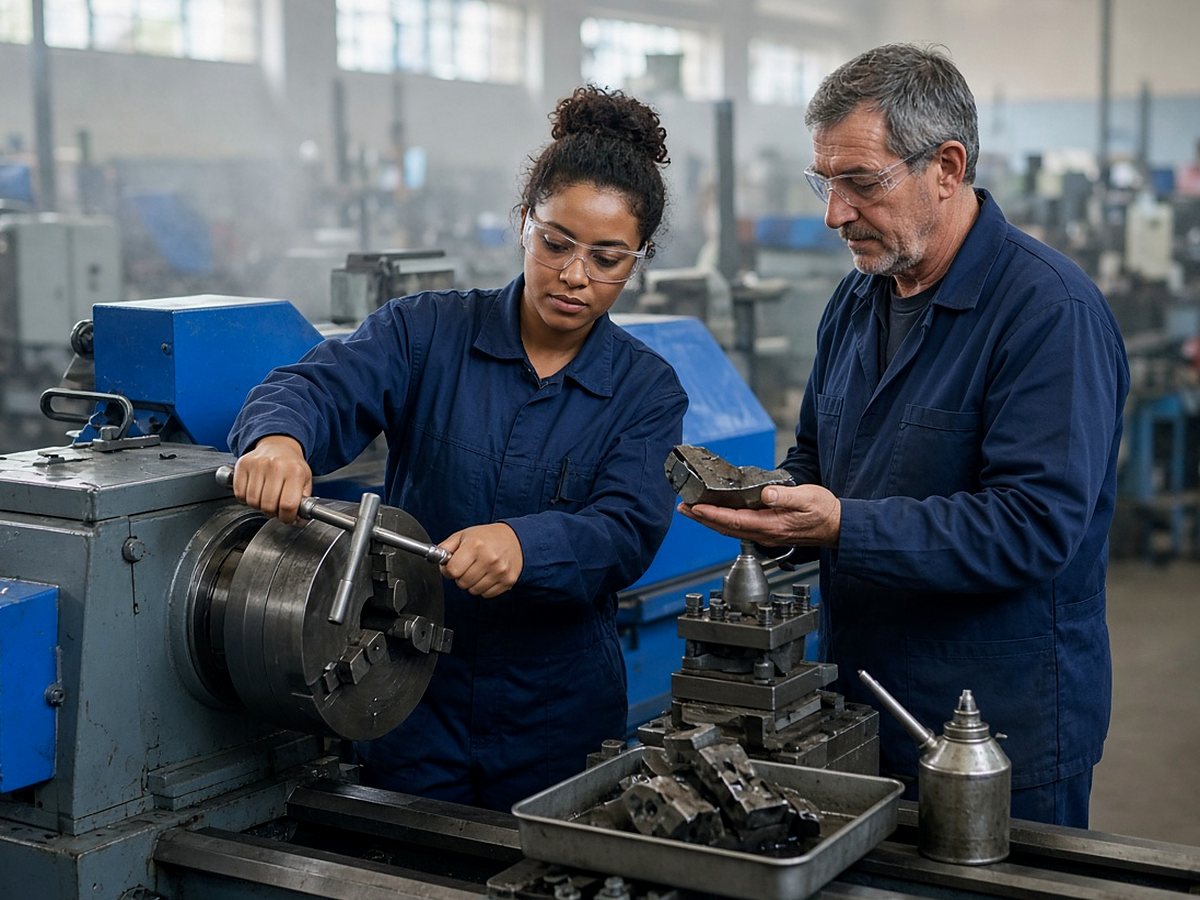
How Training Day works on a live shop floor
Training Day focuses on what happens after a machine is back in use on the shop floor. It addresses setup errors, wear from handling, and the operator questions that only show up during daily production.
Training Day starts with the machine that has just gone back into production and the faults that appear under normal cutting load. Include the machine type, the replacement part fitted, and what the operator saw during the first shift. Randburg dust, coastal humidity, unstable supply, and long transport legs to Durban or Cape Town can all change how a machine behaves once daily use resumes.
Bring clear photos from the first run after fitment, not only the machine at rest. Close shots of guards, slides, lubrication points, toolholding and the operator panel help separate setup error from wear or damage in use. Those records are useful when the same question returns after a weekend stop or a change of operator.
Operator handover after restart
Training Day gives your team a working handover around the fitted parts, the checks to repeat, and the signs that need attention before damage spreads. The session covers machine condition in use, not just the component on the bench. Operators and supervisors leave with notes tied to that machine, that setup, and that production routine.
Bring the machine serial, current part numbers, and a phone photo of the setup used during production. During Training Day, we match replacement parts to the machine, show the checks that matter before each shift, and note wear points that operators should watch on recurring jobs. Include the machine model and the issue seen while cutting, drilling, or feeding material.
- Operator checks after first production run
- Wear points marked during handover
- Questions logged from the shift team
South African running conditions
Training Day must account for the way South African workshops keep mixed-age machines earning. Many sites have previous repairs, adapted guards, substituted switches, or non-standard lubrication habits that affect the next fault. Raise those changes at the start so the session covers the machine as it stands now, not the catalogue version.
Coastal shops need close attention to rust, connector condition, and storage of spare assemblies. Inland sites around Johannesburg often need more focus on dust around slides, fans, cabinets and exposed ways. Power cuts and supply dips also matter, because restart settings, warm-up checks and fault history can change after repeated power loss.
Operated by Astros Marketing (Pty) Ltd from 2 Makro Place, Sunnyrock 1401.
Notes to prepare beforehand
Use Training Day when your team needs a practical handover on replacement parts, machine checks and workshop routines.
Have the job card, fitted parts list, and any alarm notes ready on the day. It helps to record who ran the machine, what material was being cut, and when the issue appeared in the cycle. That makes the Training Day record useful for stores, maintenance, and the next operator on shift.
What our Machine Tool Parts customers say
Verified Google reviews